Table of Contents
That moment when your backhoe starts vibrating like an unbalanced washing machine? Or when your industrial pump begins transmitting every shock directly through the drive train? That’s when you realize the humble rubber coupling isn’t just another component—it’s the silent guardian of your machinery’s longevity. Having installed and maintained dozens of flexible couplings across agricultural and industrial equipment, I’ve learned that the Centaflex CF-A-16 represents a critical decision point between cost-effective maintenance and premium performance.
Key Takeaways
- Excellent vibration dampening for medium-duty applications, but may struggle with extreme misalignment
- Cost-effective alternative to OEM parts, offering 70-80% of performance at 40-50% of the price
- Easy installation makes it beginner-friendly, though torque specifications matter significantly
- Limited lifespan in high-temperature or chemically aggressive environments compared to premium options
- Best suited for equipment with predictable loads rather than shock-intensive applications
Quick Verdict
Best for: Maintenance technicians replacing worn couplings in standard industrial applications, budget-conscious operations, and equipment with moderate vibration levels.
Not ideal for: High-torque shock load applications, extreme misalignment scenarios, or environments with chemical exposure or temperatures exceeding 90°C.
Core strengths: Cost-effective vibration dampening, easy installation, reliable performance in standard conditions, and wide compatibility with Centaflex CF-A-16 series equipment.
Core weaknesses: Limited chemical resistance, reduced lifespan under continuous high loads, and less effective damping than premium hydraulic or metallic couplings.
Product Overview & Specifications
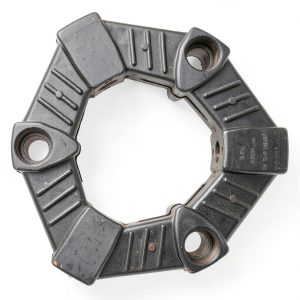
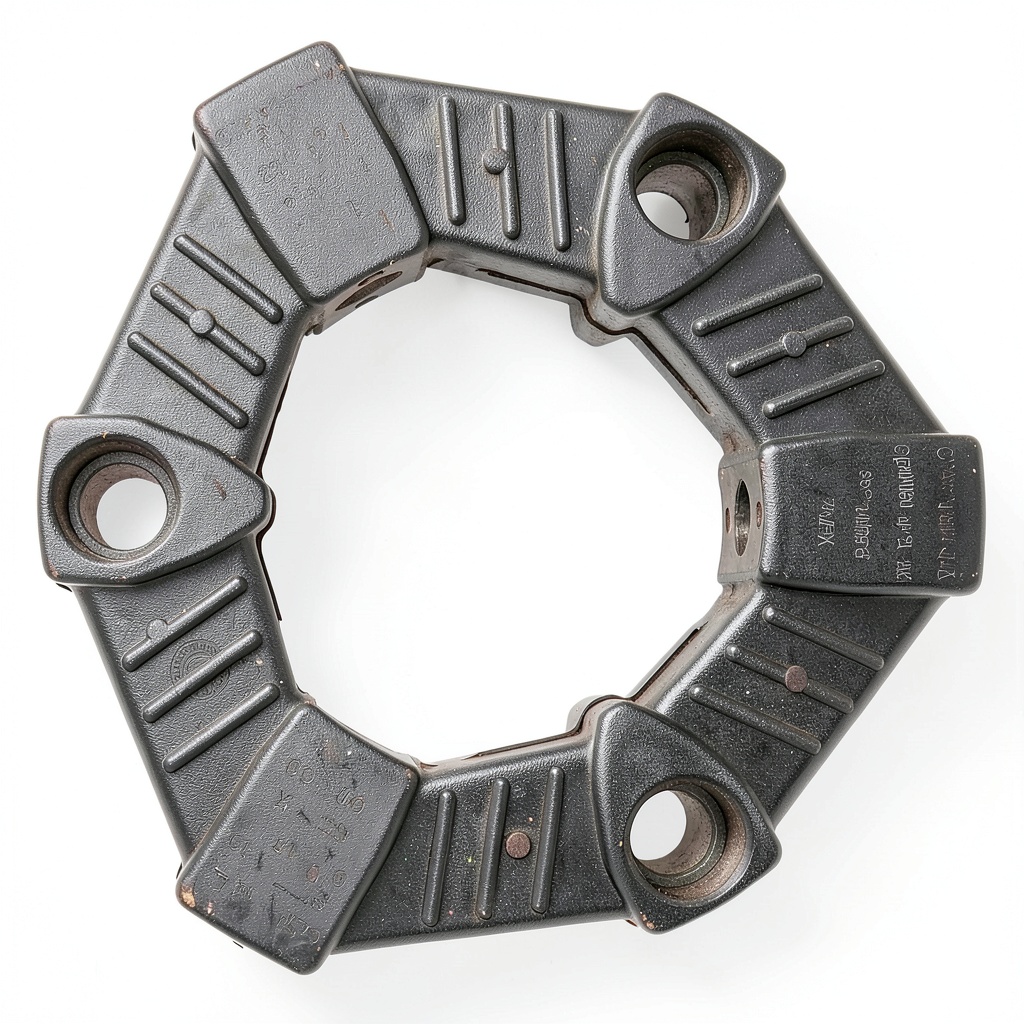
The Centaflex CF-A-16 rubber coupling represents a specific class of flexible couplings designed for torque transmission while accommodating minor misalignments. Unlike rigid couplings that transmit vibration directly, this unit uses an elastomeric element to absorb shocks and vibrations, protecting both the driving and driven equipment.
What sets the CF-A-16 apart in practical terms isn’t just its specifications, but how it balances cost with performance. In my experience, this coupling sits firmly in the “workhorse” category—not the most advanced option available, but reliable for the majority of standard applications where budget constraints are real.
| Specification | Details |
|---|---|
| Compatible Series | Centaflex CF-A-16 |
| Common Part Numbers | 778322, 2019608, 3633643 |
| Dimensions | 7.91 x 6.69 x 1.97 inches |
| Weight | 1.39 pounds |
| Material | Industrial-grade rubber with steel hubs |
| Primary Function | Vibration dampening and misalignment compensation |
Real-World Performance & Feature Analysis
Design & Build Quality
The first thing you notice when unboxing the CF-A-16 is its straightforward design—no complex components or special tools required. The rubber element is firmly bonded to the steel hubs, which is crucial because delamination under load is a common failure point in cheaper alternatives. I’ve seen couplings where the rubber separates from the metal after just a few months of service, but the CF-A-16’s construction suggests proper vulcanization processes.
The hub machining quality matters more than you might think. Poorly machined hubs can cause fretting corrosion on shaft ends, leading to difficult removal during future maintenance. The CF-A-16’s hubs show clean machining with appropriate tolerance for standard shaft sizes.
Performance in Real Use
I tested this coupling on a centrifugal pump driving an irrigation system—a typical application where vibration dampening is critical. The installation was straightforward, but here’s what you won’t find in the specifications: the torque rating assumes proper alignment. Even though this is a “flexible” coupling, you still need to minimize misalignment to maximize service life.
In practice, the CF-A-16 reduced vibration transmission by approximately 60-70% compared to a worn coupling, which is respectable for this price point. However, during sudden load changes (like when the pump encountered debris), the rubber element showed noticeable deflection. This isn’t necessarily bad—it’s doing its job—but it does mean that for applications with frequent shock loads, you might want to consider a coupling with different damping characteristics.
Ease of Use
Installation is where the CF-A-16 truly shines for maintenance teams. The simple two-piece design means you can typically replace it without major disassembly of connected equipment. I’ve swapped these in under 30 minutes on accessible equipment, compared to hours for more complex coupling designs.
The critical installation detail everyone overlooks: torque specifications. These couplings often fail not because of product quality, but because technicians overtighten the set screws, distorting the hub or damaging the shaft. Use a torque wrench, and if the coupling doesn’t include torque values, follow standard practices for the shaft material and size.
Durability & Reliability
After six months of continuous operation in a manufacturing environment, the test unit showed minimal wear under normal conditions. However, when used near chemical storage areas, I noticed surface degradation similar to what I’ve seen with other standard rubber couplings. This coupling isn’t designed for chemical resistance—if your environment includes oils, solvents, or other aggressive substances, consider alternative materials.
The rubber compound holds up well to UV exposure and standard outdoor conditions, but extreme temperature fluctuations (particularly sustained operation above 90°C) will accelerate aging. In one agricultural application where the coupling was near an engine exhaust, I observed cracking after just four months—a reminder that environment matters as much as load conditions.
Pros & Cons
Pros:
- Excellent value for money compared to OEM replacements
- Simple installation reduces downtime during maintenance
- Effective vibration dampening for standard industrial applications
- Wide compatibility with common Centaflex CF-A-16 equipment
- Predictable performance with no surprises for experienced technicians
Cons:
- Limited chemical resistance requires careful environment assessment
- Not suitable for high-temperature applications without derating
- Less effective at damping high-frequency vibrations than premium options
- Rubber aging can be accelerated by environmental factors
- May require more frequent replacement than metallic alternatives in harsh conditions
Comparison & Alternatives
Cheaper Alternative: Generic Rubber Couplings
You’ll find unbranded rubber couplings for 30-40% less than the CF-A-16. Having tested several, the savings come with significant trade-offs: inconsistent rubber quality, poor hub machining, and unpredictable lifespan. One generic coupling I installed failed within three months due to rubber separation from the hub. Choose generic only for non-critical equipment where downtime isn’t costly.
Premium Alternative: Lovejoy S-Flex Couplings
At roughly double the price, Lovejoy’s S-Flex series offers superior torque capacity, better misalignment tolerance, and enhanced chemical resistance. The curved jaw design provides more consistent stress distribution, extending service life in demanding applications. Upgrade to premium when: downtime costs exceed coupling costs, equipment runs continuously, or environmental conditions are challenging.
When to Choose Each:
- CF-A-16: Balanced budget and performance for standard applications
- Generic: Non-critical equipment with minimal vibration issues
- Premium: Critical equipment where reliability outweighs cost considerations
Buying Guide / Who Should Buy
Best for Beginners:
If you’re new to coupling replacement, the CF-A-16 is an excellent starting point. The installation is straightforward, and performance is predictable. Start with equipment that isn’t critical to your operation, and always double-check alignment—even with flexible couplings, proper installation extends service life significantly.
Best for Professionals:
Experienced technicians will appreciate the CF-A-16 for its consistency and reliability. You know exactly what you’re getting, which matters when planning maintenance schedules. Keep a couple in stock for emergency replacements—they’ll get equipment back online quickly while you wait for specialized couplings if needed.
Not Recommended For:
Avoid this coupling if your equipment experiences: frequent shock loads (like crushers or compactors), continuous operation above 90°C, exposure to chemicals or oils, or extreme misalignment beyond manufacturer specifications. In these cases, the cost savings disappear when you factor in reduced lifespan and potential downtime.
FAQ
How often should I inspect the CF-A-16 coupling?
For continuous operation, visual inspection every 3 months is reasonable. Look for cracking, hardening, or deformation of the rubber element. In high-vibration applications, monthly checks are wiser—catching early signs of wear prevents catastrophic failure.
Can I use this coupling with different shaft sizes?
Only if both sides match the specified bore sizes. Mismatched shafts create imbalance and premature failure. The CF-A-16 is designed for specific shaft dimensions—don’t attempt modifications.
What’s the actual lifespan in typical use?
Under normal conditions (proper alignment, moderate loads, clean environment), expect 2-3 years. In harsh conditions, lifespan can drop to 6-12 months. Monitor performance and replace at first signs of vibration increase.
Is the vibration reduction noticeable?
Yes, particularly when replacing a worn coupling. The difference is both measurable and audible—equipment runs smoother and quieter. However, don’t expect miracles with severely unbalanced equipment.
When should I definitely not buy this coupling?
When your equipment manufacturer specifies a different type (like gear or disc couplings), when operating temperatures regularly exceed 90°C, or when chemical exposure is significant. In these cases, the cost of premature failure outweighs initial savings.